
Where You Store Your Inventory Is a Supply Chain Decision
Updated: Jun 22
Most industrial businesses choose storage based on what is available. A facility opens up, the price works, and the location is close enough. It gets the job done.
But in industrial supply chains, where you store inventory affects more than convenience. It affects how fast freight moves, how well your operation absorbs disruption, and how much unnecessary cost builds up between the point where materials arrive and the point where they are needed.
Storage in the right location is a competitive advantage. Storage in the wrong one is a hidden operational cost.

Think of your supply chain as a series of checkpoints
Ports. Rail yards. Border crossings. Manufacturing plants. Freight moves through each of these points before it reaches the next stage of production or delivery.
When your storage sits close to one of these checkpoints, inventory flows through it naturally. When it sits far away, every movement adds distance, time, and handling. Small inefficiencies repeat themselves across every shipment, every week.
The question is not just whether you have enough available storage space. It is whether your storage is strategically positioned where your freight needs to be distributed and delivered, to be optimally cost efficient.
Port access and border proximity change what is possible
For importers, storage near a major port compresses the window between vessel arrival and warehouse receipt, it reduces demurrage exposure and decoupling arrival timing from production schedules.
For businesses moving freight between Canada and the United States, storage near a border crossing provides a buffer against the variability that crossings introduce. Bonded storage goes further; it lets you hold freight under customs control and time your movements around demand rather than around when shipments happen to arrive.
In both cases, the right location does not just reduce cost. It gives your operation room to absorb variability without disrupting production.
Location and infrastructure have to work together
Location alone is not enough. A facility in the right place that cannot handle the freight you move creates its own set of problems.
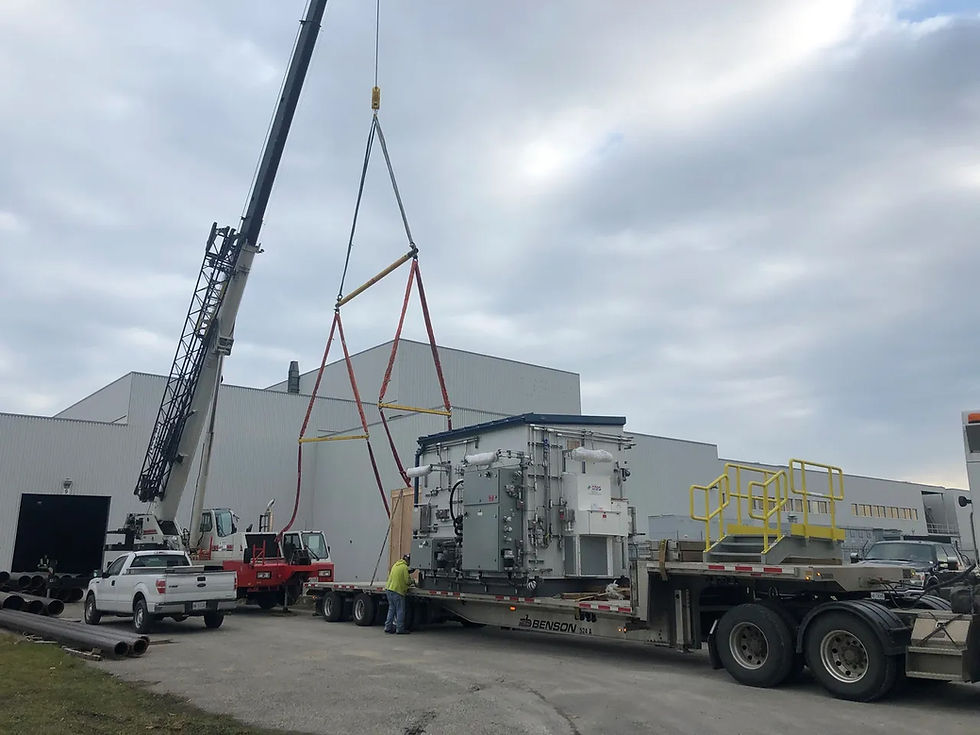
Heavy materials, oversized bundles, bulk goods, and containers requiring top unloading all place specific demands on a facility: crane capacity, floor load rating, yard configuration, clear height.
When the right location and the right infrastructure exist in the same place, storage stops being a cost line and starts being a real part of how your operation performs.
Most businesses do not revisit their storage positioning until something goes wrong. A capacity crunch. A missed window. A cost that keeps showing up without a clear explanation.
The most useful moment to ask the question is before that pressure arrives, when there is still room to evaluate whether your storage is working with your supply chain, or simply sitting alongside it.
If that is a question your business is starting to ask, our team is always available to exchange perspectives.
ANDY, Trusted to Deliver Excellence.


