The Hidden Costs of Double Handling
Updated: Sep 22
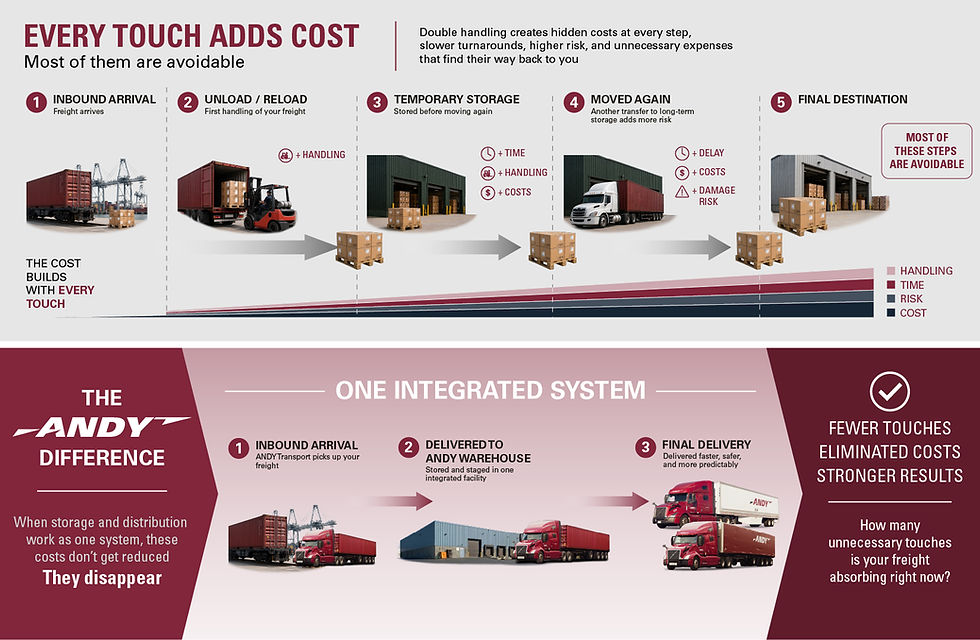
Most freight moves through multiple facilities before reaching its final destination. Freight is often unloaded, reloaded, temporarily stored, and transferred again between separate warehousing, transportation, and distribution providers.
Each additional handoff increases handling costs, transit delays, damage risk, and operational inefficiencies.
Why Double Handling Happens in the First Place
Double handling isn't usually the result of poor planning. It's the result of a fragmented system.
When transportation, warehousing, and distribution are managed by separate providers — each with their own facilities, schedules, and handoff processes — freight naturally moves more than it needs to. Each provider optimizes for their own operation, not for the end-to-end flow of your freight. The result is a chain of transfers that made sense individually but create compounding inefficiencies when viewed as a whole.
It's also self-reinforcing. Because the extra touches are baked into the process, they rarely get questioned. They show up as line items like handling fees, storage charges, transfer costs that feel like a normal part of doing business. They're not.
The root cause isn't inefficiency at any single step. It's the structural gap between the steps themselves.
ANDY eliminates unnecessary freight touches by integrating transportation, warehousing, and distribution under one operational system. Our transportation fleet, warehouse infrastructure, and logistics teams operate from the same facilities using shared systems and coordinated execution.
No unnecessary third-party handoffs. No avoidable delays. No unexpected storage or transfer costs.
A quick conversation with our team can help identify unnecessary handling within your current supply chain and show where integrated warehousing and transportation can reduce costs and improve delivery timelines.